Dune Bashing Dubai —
from AED 35.
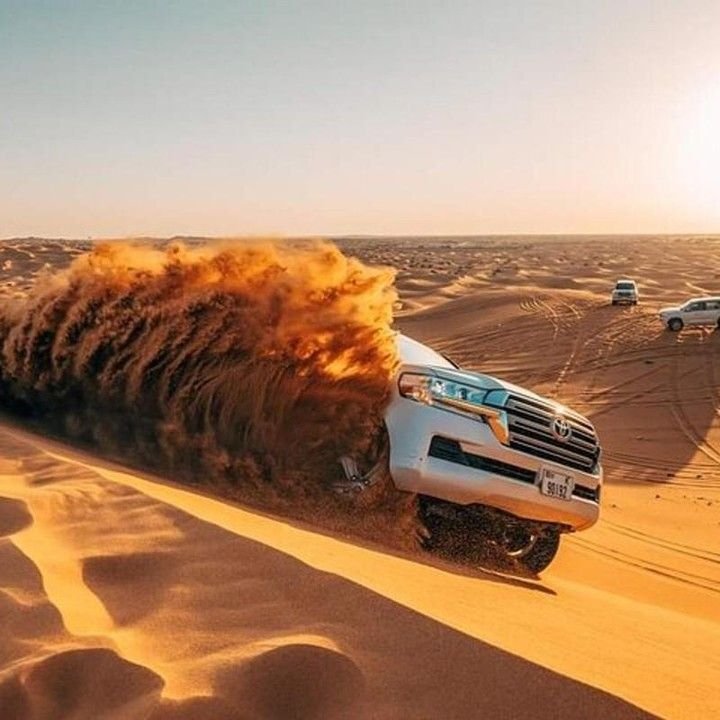
Dune bashing is the heart of every Dubai desert safari: 45 minutes of controlled sliding, climbing and drifting across the Lahbab red dunes in a Toyota Land Cruiser, driven by a DTCM-certified desert driver. It is included in every safari we run — from the AED 35 self-drive evening entry to private and VIP departures — never sold as a hidden extra. Book on WhatsApp in two minutes and pay on arrival.
Dune bashing packages — included in every safari, from AED 35
Every package includes the full activity list — dune bashing, camel ride, sandboarding, henna, sheesha, BBQ dinner and live shows. Named packages add VIP touches, private transport or extended timing on top. Planning a sunset trip? See the full evening desert safari guide or the morning desert safari — cooler, quieter, back by lunch · quad biking Dubai.
You drive to our Al Awir Road meeting point in your own car, park free, then transfer into our Land Cruiser for the dune-bashing leg. The lowest genuine entry price in the Dubai desert safari market.
💬 Book on WhatsApp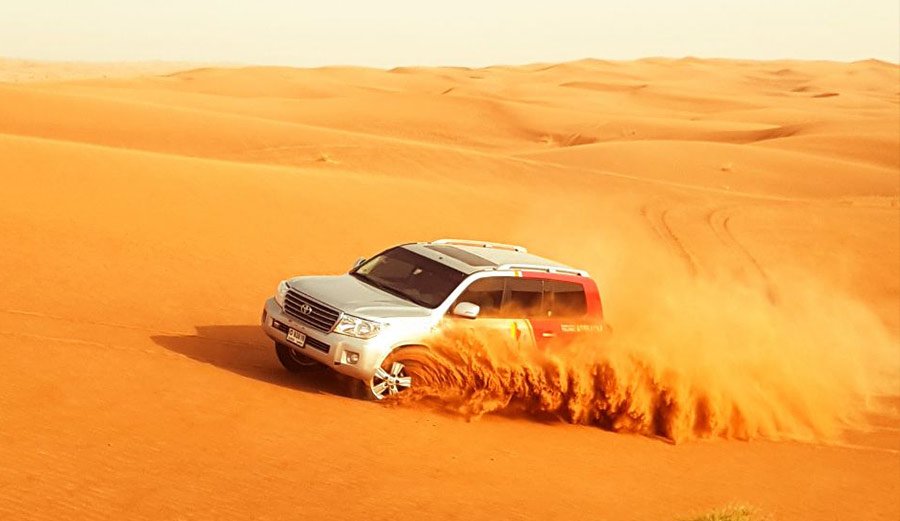
No car needed — a shared bus collects you from a central Dubai or Sharjah point and drops you back after the show. Ideal for solo travellers without a rental car.
💬 Book on WhatsApp
Door-to-door pickup in a shared 4×4 rather than a bus — a faster, more comfortable transfer for couples and small groups who still want to keep costs down.
💬 Book on WhatsApp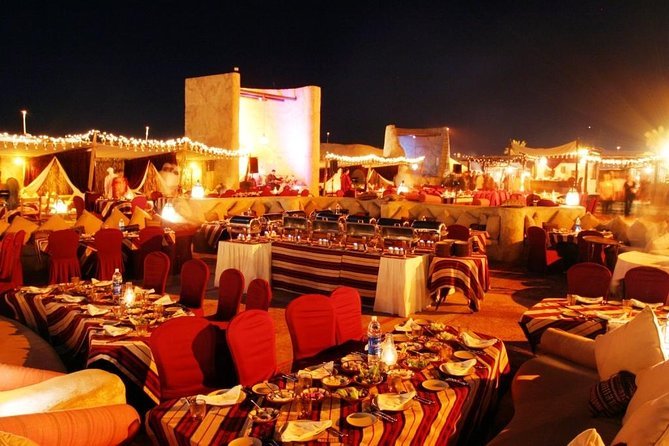
Your own dedicated Land Cruiser and driver, seating up to 6 — nobody else in your vehicle or your pace of dune bashing. Priced per vehicle, not per person, so it’s excellent value for families.
💬 Book on WhatsApp
Our hero product: VIP majlis seating, a complimentary single-seater quad bike session, sunset dune bashing and the full evening entertainment programme, all in one price.
💬 Book on WhatsApp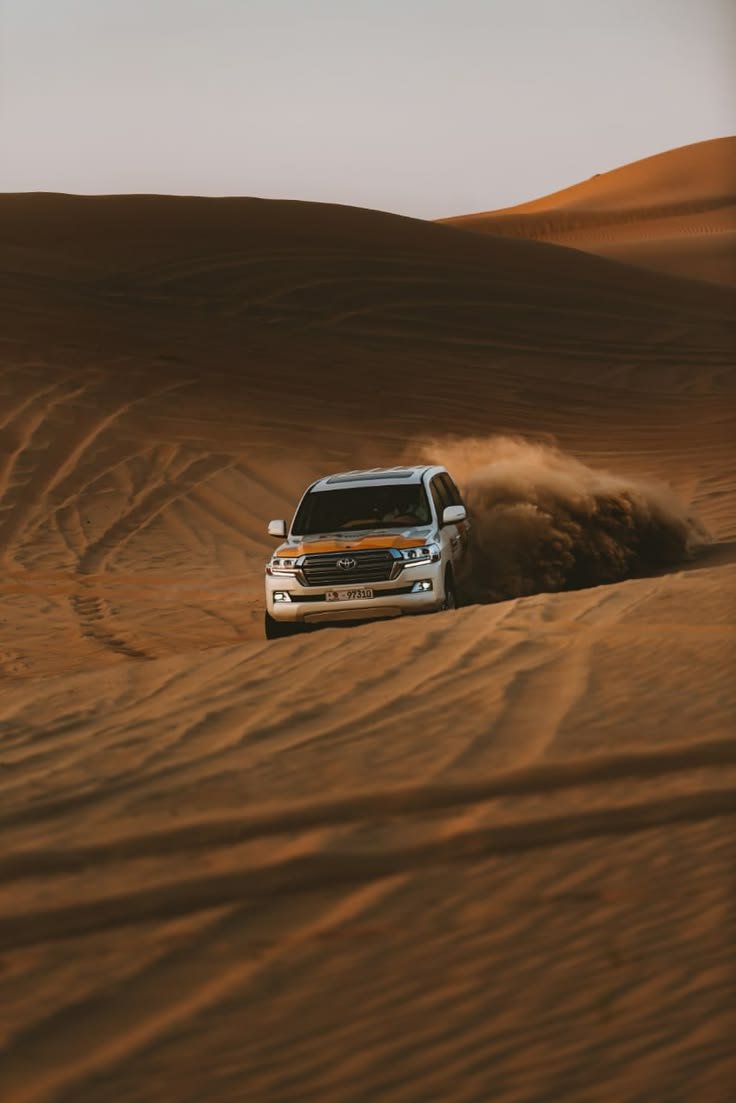
Beat the heat with an 8:30 AM start — the same dune bashing, camel ride and sandboarding, in cooler temperatures and with a shorter time commitment.
💬 Book on WhatsApp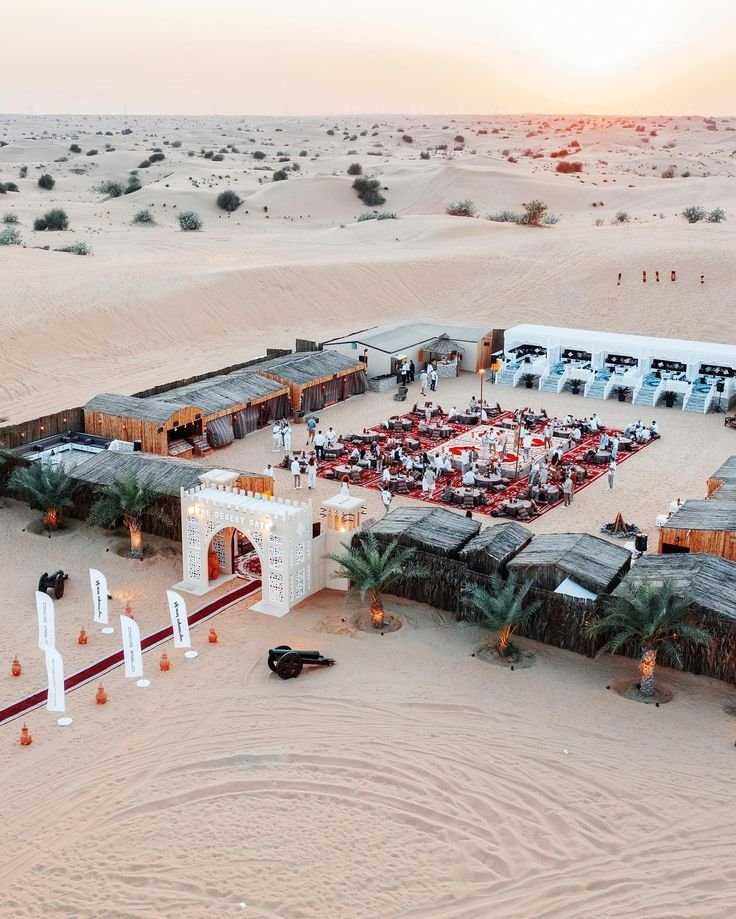
Dune bashing, dinner and a campfire at sunset, then sleep in a Bedouin-style camp under the stars before a fresh breakfast the next morning.
💬 Book on WhatsApp
Get behind the wheel yourself — a dedicated open-buggy route across the dunes for guests who want a faster, more hands-on thrill than standard dune bashing.
💬 Book on WhatsAppLooking for a Sunrise breakfast safari, a private Sundowner sunset tour, a heritage-focused Camel Trek, or a dedicated Sandboarding or Quad Bike tour? These packages are launching shortly for Dubai — message us on WhatsApp and we’ll confirm availability and pricing directly.
Build Your Safari
Book in under 2 minutes — pay on arrival
Choose your package, tell us where to pick you up, and confirm on WhatsApp. No card, no deposit — your seats are held instantly.
Step 1 — Choose your package
Step 2 — Number of guests
Step 3 — Add-ons (optional)
Step 4 — Your details
You will drive to our Al Awir Road desert meeting point — free parking, GPS pin sent after booking.
What dune bashing in Dubai actually feels like, minute by minute
Most sites tell you dune bashing is “thrilling”. Here is what actually happens in the 45 minutes, from people who run it every single day on the Lahbab dunes:
Minutes 0–5 · Deflation stop
Your driver drops tyre pressure to ~15 PSI at the desert edge — the wide, soft footprint is what lets a 2.5-tonne Land Cruiser float on sand instead of digging in.
Minutes 5–15 · Warm-up rollers
Gentle waves first — the driver reads the group. Kids aboard? The line stays smooth. Thrill-seekers? It builds fast from here.
Minutes 15–30 · The big bowls
Sideways traverses along 45-degree slip faces, controlled slides into the bowls, engine roaring on the climbs. This is the part your stomach remembers.
Minutes 30–40 · Ridge stop
Photo stop on the high ridge — on evening runs this is timed for golden hour, on morning runs for the clearest light of the day.
Minutes 40–45 · The finale
One last fast sequence into camp. Total drive: 45 minutes — competitors quoting “20–30 minutes” are running the short line.
Want more?
Add 30 extra minutes in a private Land Cruiser for AED 150 — our long-bash add-on, the best-value adrenaline upgrade we sell.
Is dune bashing safe? The specifics no one publishes
| Safety question | The straight answer |
|---|---|
| Who drives? | DTCM/RTA safari-certified desert drivers only — certification requires desert-driving assessment, first-aid training and annual renewal. Ask any operator to show the permit; we will show ours on WhatsApp before you book. |
| What vehicle? | Toyota Land Cruiser GXR fitted with internal roll cage, 3-point seatbelts for every seat, and sand flags. Tyres replaced on desert schedule, not road schedule. |
| Who should skip it? | Pregnant guests, anyone with serious heart, neck or back conditions, and children under 3. Ages 3–6 ride the gentle line. Everyone else — including grandparents — rides daily. |
| Motion sickness? | Sit in the front seat (tell us on WhatsApp — we reserve it free), eat light beforehand, look at the horizon. Drivers carry water and will shorten the line instantly if anyone feels unwell. |
| Convoy rules? | Vehicles run in radio-linked convoys with spacing rules on the dunes — never alone. Every camp and route is licensed and geofenced by Dubai tourism authorities. |
Every way to do dune bashing in Dubai — honest prices
| Option | Price | Bashing time | Best for |
|---|---|---|---|
| Evening safari (any tier) | From AED 35 self-drive / AED 50 bus | 45 min at golden hour | First-timers — bashing + camp + dinner + shows |
| Morning safari | AED 250 (AED 750 private) | 45 min on firm morning sand | Families, photographers, cruise passengers |
| Long-bash add-on | +AED 150 | +30 min private Land Cruiser | Adrenaline seekers |
| Private 4×4 (up to 6) | AED 600/vehicle | 45 min at your intensity | Groups & families who want control |
| Typical competitor “dune bashing tour” | AED 99–150 pp prepaid | Often 20–30 min | — (shorter line, extras at the gate) |
Morning or evening sand? Morning is firmer and faster after the cool night; evening ends at golden hour with the camp, dinner and shows. Compare in detail: morning safari vs evening safari.
The driving craft behind dune bashing — why the pros make it look easy
Dune bashing looks like chaos and is actually choreography. Sand is a fluid that pretends to be a solid: drive it wrong and a two-and-a-half-tonne Land Cruiser sinks to its axles in four seconds. Everything the driver does is about managing that fluid.
Tyre pressure is the whole game. At road pressure a 4×4 cuts into sand like a knife; at 15 PSI the tyre balloons and floats. This is why every convoy stops at the desert edge to deflate — and why the compressor stop on the way out is non-negotiable.
Momentum is fuel. Sand steals speed constantly, so the driver banks momentum before every climb and spends it on the crest — too little and you bog on the face, too much and you launch off the top (spectacular, forbidden, and how amateur videos end). The crest itself is taken at an angle, never square, so the car settles onto the down-slope instead of see-sawing on its belly.
The slip face slide — the signature move where the car traverses a steep dune wall sideways — works because the driver keeps the front wheels pointed downhill and lets gravity, not the throttle, set the pace. Done right it feels lawless and is completely controlled. Done wrong it is a rollover, which is why it is a certified-professional manoeuvre and why our vehicles carry roll cages they have never needed.
Reading sand colour: dark rippled sand is firm; pale smooth sand is soft and hungry. Your driver reads it at 60 km/h the way you read a road sign — the line he chooses through a dune field is a live calculation refreshed every second. Forty-five minutes of that calculation is what you are actually paying for.
From Bedouin routes to national sport — a short history of dune driving
Desert driving in the Emirates did not start as tourism. When oil exploration crews arrived in the 1950s, they hired Bedouin guides who navigated the sands by dune shape and star line; the first “dune bashing” was Land Rovers following camel knowledge. The guides taught the drivers that sand has moods — the same knowledge our drivers use today, with better tyres.
Through the 1980s and 90s, desert driving became the Emirati weekend: families in convoys, falaj picnics, informal hill-climb contests at Moreeb Dune in Liwa that grew into today’s festival where turbocharged buggies attack a 300-metre, 50-degree wall of sand. Tourism arrived properly in the late 90s when Dubai’s operators realised the drive the locals did for free was the experience visitors would fly for.
The craft professionalised with it: DTCM licensing, certified desert-driving assessments, convoy radio protocols and geofenced routes replaced the free-for-all. What has not changed is the grin — the same one the Bedouin guides reportedly wore watching oil men discover what sand does. Your driver inherited it. You will see it at the deflation stop, right before the first dune.
The 60-second operator checklist before you book any dune bashing
Every rollover video on the internet has the same backstory: unlicensed driver, borrowed vehicle, no convoy. Sixty seconds of questions filters all of it. Ask any operator — including us — these five, on WhatsApp where the answers are in writing:
1. “Show me your DTCM operator licence.” Licensed operators send it in one message. Resellers change the subject. 2. “Who owns the vehicles?” If the answer is a partner-of-a-partner, your complaint chain on the day is exactly that long. 3. “How long is the actual bashing?” Get the minutes in writing — “45 minutes” and “desert experience” are different products. 4. “Roll cage and belts for every seat?” The pause before the answer is the answer. 5. “What happens if my child is scared / my mother feels sick?” The right answer involves gentler lines and front seats, offered instantly — because a professional has handled both a thousand times.
We publish our answers on this page precisely so you can hold us to them at the camp gate. Screenshot freely.
Why the Toyota Land Cruiser owns the dunes — a 70-year engineering answer
Ask any Gulf desert driver why the fleet is Land Cruisers and the answer starts in 1951 and never really ends. The modern GXR that carries you across Lahbab is the compound interest of seventy years of desert feedback: a ladder chassis that twists with the dune instead of fighting it, approach and departure angles that let it crest without beaching, a naturally-aspirated V6 whose power delivery on sand is as predictable as a metronome, and cooling engineered for 50°C Augusts that would boil lesser radiators dry.
The desert-spec details you can spot from your seat: the sand flags (convoy visibility over blind crests), the deflated bulge of the tyres at 15 PSI, the snorkel line on some units (dust management, not rivers), and the roll cage integrated behind the trim — present on every tourism-licensed vehicle and inspected annually as a condition of the licence.
Why not something newer or flashier? Hummers ride harder and drink deeper; Defenders divide opinion and mechanics; buggies are brilliant but seat two. The Land Cruiser seats six, fixes anywhere, and holds value so well that a desert operator’s fleet is quietly also its pension. When you feel the driver flick through a slip-face traverse with two fingers on the wheel, you are feeling market consensus: every serious desert operation on the peninsula arrived at the same machine independently, which is the closest thing engineering has to a peer-reviewed conclusion.
Reading the Lahbab dune field — a passenger’s geology guide
Forty-five minutes of bashing is better with subtitles. The dunes you cross are not random sand piles; they are a system, and once you see it, the drive becomes a documentary.
Why the sand is red: Lahbab’s signature rust colour is iron oxide — each grain wears a microscopic coat of it, deepening with age. The reddest ridge lines are the oldest sand in the field; the paler bowls are younger imports still earning their colour. Sunset multiplies the effect, which is why photographers speak of Lahbab the way they speak of nowhere else within an hour of a major city.
The shapes have names: the long parallel ridges you traverse are linear dunes, built by the region’s two-season wind regime; the crescents that migrate across the flats are barchans, the fastest movers (metres per year); the big three-armed peaks where drivers play are star dunes, formed where winds argue from multiple directions. The famous “Big Red” — Al Hamar — a few kilometres south is a hundred-metre star dune and the local Everest for weekend petrolheads.
The slip face you slide down holds at exactly 32–34 degrees, sand’s angle of repose — steeper and it avalanches, which is precisely what the surface does in soft whispers under the car, and why the traverse feels alive. The ripples underfoot at the photo stop rebuild nightly; each dawn prints a fresh page. The desert your morning convoy crosses was, in the strict sense, published that day.
How to film dune bashing so the video matches the feeling
Every guest films the bashing; most footage undersells it. The physics of why: your inner ear experiences accelerations the phone cannot see, so raw clips look gentler than they felt. The fixes are simple and the drivers know them all.
Mount low, shoot wide. Braced against the windowsill at ultra-wide, the frame keeps horizon and dashboard — the tilt reads, the drops register. Handheld chest-height footage smooths the drama into mush; stabilisation is the enemy of truth here, so switch it off for the big bowls.
The money shots to ask for: the outside angle — at the ridge stop, drivers will happily run one flagged pass beside the group so you can film a Land Cruiser cresting through blown sand (the shot every operator uses in ads, free to make yourself); the sand-spray window shot on a traverse, phone tight to the glass; and the silent-cabin reaction shot facing backwards, which wins the group chat every time.
Housekeeping: zip the phone away between stops — Lahbab dust is talc-fine and lens-hungry; a sandwich bag over the phone with the lens poking clear is the driver-approved field fix. GoPros with suction mounts are welcome inside the glass; exterior mounts shake loose on the first bowl and become archaeology. And film the tyre-deflation stop — thirty seconds of hiss that, edited first, makes every subsequent clip make sense.
From Lahbab to Dakar — dune bashing’s motorsport bloodline
The driving you experience on a safari is the recreational cousin of a serious motorsport lineage, and the family resemblance is visible if you know where to look.
The Emirates Desert Championship and the UAE Baja series run cross-country rally machinery through terrain like Lahbab’s all winter — the same crest-and-commit decisions your driver makes at tour pace, made at 140 km/h by factory teams. Several safari drivers across the industry moonlight as recovery crews and course marshals for these events; desert skill is a small world, and the techniques cross-pollinate.
The Dakar Rally’s Saudi-era routes cross dune systems geologically identical to the ones outside your window, and the T1+ machines that win it — 360-horsepower space-frame Toyotas — are the Land Cruiser’s ambitions with a budget. The signature Dakar problem, judging a blind crest at speed, is precisely the skill your driver demonstrates forty times per session, at a pace where everyone keeps their lunch.
Moreeb Dune’s hill-climb festival in Liwa each winter is the region’s drag strip: turbocharged buggies attacking a 300-metre, 50-degree face for national glory, watched by tens of thousands. Guests who catch the bug on a safari graduate there as spectators — a two-and-a-half-hour drive and a genuine bucket-list motorsport weekend.
None of this is required knowledge for enjoying your forty-five minutes. But when the driver three-point-turns on a knife-edge crest with visible boredom, it helps to know the sport he is being bored at.
Ten questions guests ask our dune drivers, answered from the front seat
“Have you ever been stuck?” Everyone has been stuck; the skill is being stuck for ninety seconds instead of an afternoon. Convoy recovery is choreography — one tow strap, one shovel, mostly reputation management. “Have you ever rolled one?” Not with guests, which is the only statistic that matters, and the roll cage’s job is to make the answer survivable if physics ever disagrees. “How long to learn this?” Licence assessment after months of training; actual fluency after two or three years; the two-fingers-on-the-wheel boredom you are watching, a decade.
“What’s the scariest thing out here?” Unanimously: freelance drivers in rented 4×4s appearing over blind crests. It is why licensed convoys announce themselves on radio and why we keep repeating the licence checklist upstairs. “Do you get bored of it?” Of the driving, never — the dunes move nightly, so no two weeks run the same line. Of the question, slightly.
“Best passenger reaction ever?” A tie between the grandmother who demanded a second lap and the marriage proposal where the ring was taped under the driver’s sun visor for three days. “Worst?” Nobody vomits gracefully, and the front seat exists for a reason — ask for it. “Can I drive?” On the dunes, no — licence law, not gatekeeping. On the quads afterwards, entirely yes, which is the correctly ordered ambition.
Forty-five minutes, properly done — the dune bashing standard
Strip away the tables, the history and the physics, and dune bashing is a promise about forty-five minutes: a certified professional, a maintained machine, the full Lahbab line, and a drive calibrated to your car’s actual passengers — thrill-seekers get the big bowls, grandparents get the graceful version, and both get the golden-hour ridge.
Everything else on this page exists to make that promise auditable. The licence you can demand on WhatsApp, the roll cages you can see, the minute-by-minute you can time, the prices with no gate ambush waiting — the transparency is not marketing generosity; it is the operating system of a business that runs on repeat guests in a market that mostly does not.
Dune bashing is included in every safari we sell, from AED 35 self-drive to the VIP majlis evening. Pick your tier above, send one message, and let the man with two fingers on the wheel show you what seventy years of Land Cruisers and a decade of his own mornings add up to.
And if the forty-five minutes leave you wanting more — the long-bash add-on, the quad session, or the full overnight under the stars — every extension is one WhatsApp line away, priced on this page, and honoured at the camp without renegotiation. The dunes are not going anywhere; the same cannot be said for tonight’s golden hour. Book the seat.
One practical postscript for planners: dune bashing photographs best in the last ninety minutes of light, rides firmest in the first three hours of morning, and books fullest on winter weekends — three facts that, combined, answer almost every scheduling question this page receives. Photographers take the evening line, families take the morning, and everyone books Tuesday if they hate company. The Lahbab dunes have kept the same office hours for several thousand years; they will accommodate yours.
The unwritten rules of the dunes — convoy culture and desert manners
The Lahbab dune field is a commons — safari convoys, private Emirati weekenders, boarders, camel herders and the occasional film crew all share it — and it runs on an etiquette worth knowing even as a passenger, because your driver is practising it constantly.
Convoy law: vehicles crest one at a time (blind crests are the desert’s only real hazard), the lead car’s line is the convoy’s line, and a stopped vehicle anywhere means every passing driver slows to check — the no-driver-left rule predates radios and outranks schedules. Flags up always; recovery gear lent without being asked; the tow strap returned washed, which is desert humour with a straight face.
Sharing the field: camel trains have absolute right of way (they were commuting these routes first by several millennia), boarders on a face own that face until they clear it, and private family camps are given wide, dust-free berth — throttle courtesy near tents is the local measure of a professional. Leave-no-trace, desert edition: everything packed out, tyre pressure restored at the compressor stop (deflated tyres on tarmac destroy both), and the unspoken one — no cutting fresh tracks across an untouched slip face someone is photographing. The dunes erase everything nightly, but manners are about the hours before the wind.
Guests who notice this culture tend to name it later as part of the experience: the desert’s size makes room for everyone, and the etiquette is how its regulars say so.
How weather rewrites the dune bashing line — a driver’s meteorology
The same 45-minute drive is a different drive by weather, and the drivers re-plan it daily. After humid nights (most of them, October–April): the crust is load-bearing and fast — the full line runs, the big bowls included, and the morning convoys carry the sharpest drives of the season. After rain — Dubai’s rare gift — the desert firms like wet cast sand: speed everywhere, colours saturated, and the drivers quietly competing for the cleanest lines of the year; a post-rain safari is the connoisseur’s jackpot.
In wind: above ~30 km/h the crests smoke with blown sand and visibility on the ridge lines drops — the line moves to the sheltered bowls and lower traverses, losing altitude but not entertainment. Full shamal days (a handful annually) reroute or reschedule with the refund rule already covered above. In summer heat: the afternoon surface goes bottomless — soft, deep, momentum-hungry — which is why summer bashing lives at dawn and dusk and why the driver’s deflation stop drops pressure a notch further in August.
The passenger take-away: there is no bad-weather safari, only re-tuned ones — and if your dates are flexible, the day after weather (any weather) is consistently the field’s best. Ask the WhatsApp thread what the dunes are doing this week; the drivers’ forecast beats the app’s, because the app has never had to climb out of a soft bowl in July.
Where to sit in the Land Cruiser — a seat-by-seat guide to the same drive
Six seats, six different safaris. The front passenger seat is the connoisseur’s chair: the widest view, the driver’s commentary, the least motion (you see every crest coming) — and ours to give, free, to whoever asks first on WhatsApp; motion-sensitive guests hold permanent priority. The middle row is the family bench: best balance of view and stability, the seats children should hold, and the row from which the classic sand-spray window videos are filmed.
The rear bench is, honestly, the rollercoaster row — every dune’s movement amplified by the wheelbase, the screaming section by popular election, and precisely where the thrill-seeking friends should be loaded. Families self-sort into this physics within one dune; our drivers pre-sort by asking at pickup, which is why the seat question in your booking thread is not small talk.
The swap ritual: the ridge photo stop doubles as the seat exchange — half the fun of a shared car is comparing testimony afterwards, and the rear-bench veterans’ faces at the swap are their own review. Private-car groups choreograph freely; shared-car guests find the convoy’s seat culture self-organising and unfailingly good-humoured. There are no bad seats — only different volumes of the same forty-five minutes.
Dune bashing as a family rite of passage
Ask UAE-raised adults about childhood and dune bashing appears with the reliability of a school memory — the family Land Cruiser, the grandfather’s driving legends, the first big bowl scream. The safari version industrialised the tradition without changing its shape: children still graduate from lap-clutching to front-row demands in a single drive, and parents still discover their own childhood grin in the mirror.
The practical scaffolding for families is threaded through this page — gentle lines on request, seat strategy in the guide above, the under-3 camp transfer, the pregnancy rule — but the cultural note deserves its own line: this is not an imported thrill ride; it is the region’s own weekend joy, packaged so visiting families can borrow it for an evening. The children in the next convoy over are local; the screams are identical; the rite transfers cleanly at every border. Book the row your kids will remember arguing over.
Dune bashing for solo travellers — the shared car as social engine
Solo guests treat dune bashing as the trip’s risk and report it as the highlight, for one structural reason: the shared Land Cruiser is Dubai’s most efficient friendship machine. Six strangers cannot survive the third bowl as strangers — the physics of collective screaming forbids it — and the ridge-stop photo swap completes what the dunes began. Our solo-guest reviews mention their carmates by name at a rate no other activity in the city approaches.
The practical notes: the front seat is the solo traveller’s throne (view, driver conversation, first claim via WhatsApp), the bus tier feeds the most social convoys, and dinner at the camp’s communal tables extends the car’s society by three hours. Safety logistics — named booking, radio convoy, staff everywhere — make it among the most supervised solo evenings available in the Emirates. Come alone; the desert has never once returned anyone that way.
Dune bashing Dubai — frequently asked questions
Dune bashing is included in every safari we run — from AED 35 self-drive or AED 50 with bus pickup on the evening safari, and AED 250 on the morning safari. A 30-minute private long-bash extension costs AED 150. Competitors sell “dune bashing tours” at AED 99–150 prepaid, often with a shorter 20–30 minute line.
45 minutes with us — the full Lahbab line including the big bowls and the ridge photo stop. Add the long-bash option for 30 more minutes in a private Land Cruiser (AED 150).
Yes, with a licensed operator. Our drivers hold DTCM/RTA safari certification, every Land Cruiser has a roll cage and seatbelts for all passengers, and vehicles run in radio-linked convoys. We will show you our operator permit on WhatsApp before you book.
Children from 3 years ride with a gentler dune line on request; under-3s transfer to the camp on the graded track instead. Ages 6+ typically love the full line.
No — dune bashing is not safe during pregnancy. Pregnant guests ride to the camp on the smooth graded track and enjoy the full camp evening; the price stays the same.
Ask for the front seat (free — just mention it on WhatsApp), eat light before the safari, and watch the horizon during the drive. Our drivers shorten or soften the line immediately if anyone feels unwell.
On the Lahbab red dunes off Al Awir Road, about 45 minutes from Downtown Dubai — the tall iron-oxide dunes, not the flat grey sand near the city. This is the same desert used for the biggest bowls in the Emirates.
Morning sand is firmer after the cool night, which means faster, sharper runs and the clearest photo light. Evening bashing ends at golden hour and flows into the camp, BBQ dinner and shows. Pure driving: morning. Full experience: evening.
No — you ride in our Land Cruiser with a certified driver. Self-drive guests only drive their own car on paved road to the Al Awir meeting point (AED 35 evening entry), then transfer into our 4×4 for the dunes. You never take your own vehicle onto the sand.
One WhatsApp message with your guest count and pickup area — evening seats can usually be confirmed until about 13:00 the same day. Pay the driver on arrival; free cancellation up to 24 hours.
What guests say after their Dubai desert safari
We hold a ★4.9 average across 3,500+ reviews. These are the three things guests mention most often: the driving, the food, and the fact that the price they saw online was exactly the price they paid at the camp.
“The dune bashing driver was superb — thrilling but you always felt safe. We paid AED 50 each for the bus pickup from Deira City Center and honestly expected a catch. There wasn’t one. BBQ dinner was excellent.”
Sarah M. · United Kingdom“Booked the VIP evening on WhatsApp in the morning, got picked up from Sahara Center in Sharjah the same day. The quad bike and the majlis seating made it feel far more expensive than AED 250. Kids loved the fire show.”
Imran K. · Sharjah“We drove ourselves to the Al Awir meeting point — AED 35 per person for dune bashing, camel ride, sandboarding and a full dinner show is the best value activity we found in the whole of Dubai.”
Elena & Marco · ItalyReady for the dunes? Send us a message.
Pick your package above, or just tell us your date and guest count on WhatsApp — we’ll confirm your price, pickup time and meeting point within minutes.
💬 Book on WhatsApp — Pay on ArrivalTonight from AED 35, pay on arrival
No card, no deposit.