
Abu Dhabi Sand DunesHow they form, the dune type that dominates the region, why the sand glows golden, and how tall they really get
There is real science behind the golden waves you see on a desert safari. This is a complete guide to Abu Dhabi’s sand dunes — how they formed, the linear (seif) dune type that dominates this region, why the sand glows that distinctive orange-gold, how tall they get compared to the world-famous Moreeb Dune, and how to experience them for yourself on a desert safari from AED 40.
Desert safari from AED 40 · Al Khatim & Al Khaznah desert · ~45 min from the city · pay on arrival
Abu Dhabi sand dunes, at a glance
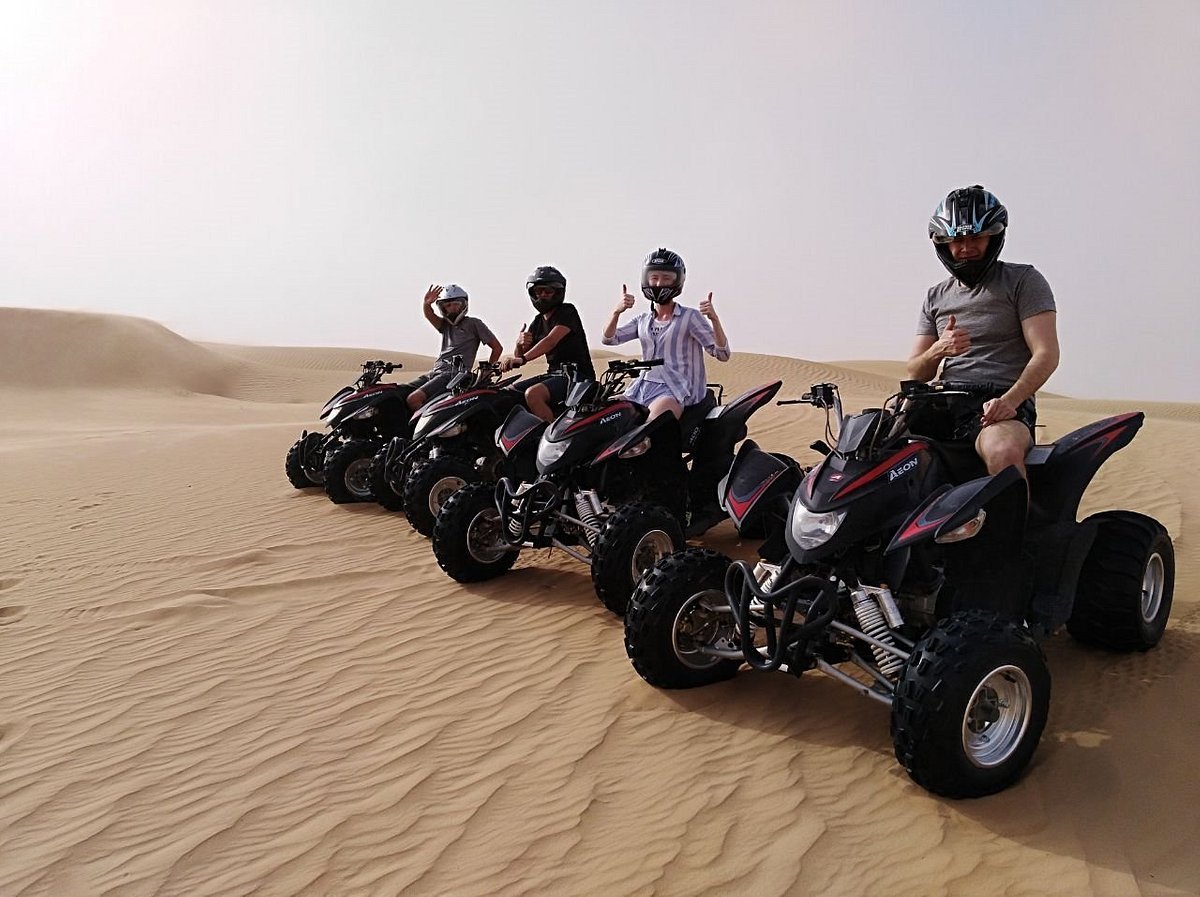
The dunes behind every package we run
Here are the practical facts about Abu Dhabi sand dunes, at a glance — the short version, if you only have a minute. For the full science, see the guide below; for booking, the package and builder are right above. No online payment — just choose your package and pay on arrival.
| Detail | What to expect |
|---|---|
| Dune type | Linear (seif) dunes — long, branching ridges |
| Height | ~20–50 m around Al Khatim; up to ~300 m at Liwa’s Moreeb Dune |
| Colour | Golden-ochre, from iron-oxide content in the sand |
| Do they move? | Yes — wind migrates them gradually over time |
| Fossil dunes | A separate, cemented formation — see our Fossil Dunes guide |
| Best photo time | Sunrise & sunset, for shadow and texture |
| Book at our location | From AED 40 — the same Al Khatim & Al Khaznah desert, every package |
Desert safari prices at a glance
Self-drive AED 40 · shared bus AED 60 · shared 4×4 AED 150 · private Land Cruiser AED 700 for up to 6. Every option includes dune bashing, a camel ride, sandboarding, the BBQ dinner and live shows. Compare every package, or build your safari below and send it on WhatsApp — pay on arrival.
Pick a package, add your extras, send on WhatsApp
Choose your base safari, tap the add-ons you want, and we’ll have your custom total ready. Your inquiry goes straight to our WhatsApp — we reply with availability and pickup details.
Your Safari
Prices per the option’s unit. Final total confirmed on WhatsApp.
No online payment. We confirm availability, pickup time and final price by WhatsApp on +971 50 414 6025.
How sand dunes actually form
Wind picks up loose sand grains and deposits them downwind wherever airflow slows, building mounds that grow into ridges over thousands of years. The sand itself was originally exposed as sea levels and coastlines shifted across the region tens of thousands of years ago, leaving behind the loose sediment that wind continues to shape today.
Real geology, not guesswork
Our dunes are scientifically surveyed linear (seif) dunes, not a vague “Arabian desert” description — verified facts about the exact terrain you will be driving across.
Sized for thrilling dune bashing
At 20 to 50 metres, our local dunes are tall enough for a genuinely exciting 4×4 climb, without needing the multi-hour trip a 300-metre Liwa mega-dune demands.
See the science for yourself
Climb a dune at sunset, watch the colour shift to deep amber, and feel the texture of sand that has been shaped by wind for tens of thousands of years.
Dune types — and why ours are linear (seif) dunes
Here is the full breakdown — dune types, the colour science, how tall they get, and how it all ties back to the safari you book.
⭐ Abu Dhabi sand dunes, at a glance
The golden waves of sand you ride across on a desert safari are not random — they are the product of a real, well-studied geological process. Abu Dhabi’s dunes formed over tens of thousands of years as wind picked up loose sand and deposited it downwind, building up ridges that scientific surveys show are mostly long, branching linear (seif) dunes, reaching up to around 40 metres in the eastern desert near Al Khatim. The warm golden-orange colour comes from iron-oxide content in the sand grains, and the dunes are still actively moving today, shaped grain by grain by the wind. This guide covers how the dunes formed, what type they are, why they are this colour, how tall they get compared to the world-famous Moreeb Dune, and how fossil dunes differ from the active ones you experience on safari.
📍 How sand dunes actually form
Dune formation starts with a sand source. In this region, sand grains were originally exposed as sea levels and coastlines shifted over tens of thousands of years, leaving behind loose sediment for the wind to work with. Once exposed, wind picks up and carries sand grains, depositing them wherever the airflow slows — behind small obstacles, in the lee of other dunes, or simply where wind speed naturally drops. Over thousands of years, this slow, repeated process builds up mounds that grow into ridges and, eventually, full dune fields. Crucially, this is not a one-time event: the dunes you see on safari today are still actively forming and shifting, grain by grain, every time the wind blows across them.
🔍 Dune types — and why ours are linear (seif) dunes
Geomorphologists classify sand dunes into several broad types based on their shape, which is determined largely by wind direction and sand supply. Barchan (crescent) dunes form where wind blows steadily from one direction and sand supply is limited, creating isolated, crescent-shaped mounds that can migrate as cohesive units. Linear (seif) dunes form long, straight or gently curving ridges, often running for kilometres, typically where wind direction is fairly consistent but with some seasonal variation. Star (pyramidal) dunes form where wind blows from multiple directions throughout the year, building tall, multi-armed peaks rather than ridges. A scientific survey of the eastern Abu Dhabi desert, covering the Al Khatim region, found the dunes here are predominantly the linear, branching type, oriented broadly north-west to south-east — which is exactly the long, rolling ridge structure you cross during dune bashing.
🏙️ Sand dunes elsewhere in the wider region
While linear dunes dominate around Al Khatim, the picture changes further south-west. Toward Liwa and the edge of the Empty Quarter (Rub’ al Khali), dunes grow dramatically larger and shift toward star and complex compound forms, including the famous Moreeb Dune. Other notable dune-related sites in the Abu Dhabi region include the Al Wathba area, where wind-carved rock formations known as the Fossil Dunes preserve ancient, now-solidified dune shapes rather than active sand. Together, these sites show the range of dune environments across just one emirate — from the rolling, actively shifting ridges near the city to the towering mega-dunes of the deep desert.
🏙️ The colour science & how tall dunes get
The signature golden-to-ochre colour of Abu Dhabi’s sand comes mainly from iron-oxide content in the grains — essentially the same chemistry that gives rust its reddish-orange hue, present here in much smaller, finer concentrations. Mineral surveys of the region also find a mix of quartz, carbonate and mafic minerals in the sand, which subtly affects the exact shade from one area to another. The colour is most vivid at sunrise and sunset, when low-angle light intensifies the warm tones and casts long shadows across the ripples. On height: dunes around Al Khatim and the wider eastern desert typically reach 20 to 50 metres, while Moreeb Dune near Liwa rises to roughly 300 metres with a steep 50-degree slip face, among the tallest sand dunes anywhere in the world.
💨 Do dunes actually move? Migration explained
Yes — dunes are not static. Wind erodes sand from the gentler, windward slope of a dune and carries it up and over the crest, depositing it on the steeper, sheltered leeward slope. Repeated over time, this slowly shifts the entire dune downwind, sometimes by metres per year. Smaller dunes generally migrate faster than large ones, since there is less sand mass to move, and migration speed also depends on wind strength, consistency and how much loose sand is available. This is part of why dune-bashing routes and the exact shape of the desert can subtly change from season to season, even though the broader dune field has looked similar for generations.
⚖️ Sand dunes vs fossil dunes — what is the difference
It is easy to confuse the two, but they are quite different. The sand dunes you ride across on a desert safari are active — loose sand, still being shaped and moved by wind today. The Al Wathba Fossil Dunes, by contrast, are ancient dune shapes that became cemented in place by mineral deposits (mainly calcium carbonate) roughly 120,000 to 150,000 years ago, while the underlying rock itself is several million years old. Once cemented, fossil dunes stop moving entirely and become solid rock formations, preserving a snapshot of how the desert looked tens of thousands of years ago. They are a genuinely fascinating complement to an active-dune safari — see our dedicated Fossil Dunes guide for the full geological story and how to visit.
📷 Photographing sand dunes — getting the texture & shape
Sand dunes are deceptively hard to photograph well in flat, midday light, which washes out their texture and makes them look featureless. The secret is timing: shoot at sunrise or sunset, when the low sun angle throws long shadows across every ripple and curve, revealing the dune’s true shape and texture. Side-lighting (sun coming from the side rather than behind you) exaggerates these shadows further for a more three-dimensional look. Get low to the ground for a dramatic foreground, include a person or vehicle for scale on the larger dunes, and look for clean, untouched ripple patterns before they are disturbed by footprints or tyre tracks. A polarising filter can deepen the sky and sand contrast if you are using a camera rather than a phone.
🚙 Why dune shape matters for dune bashing
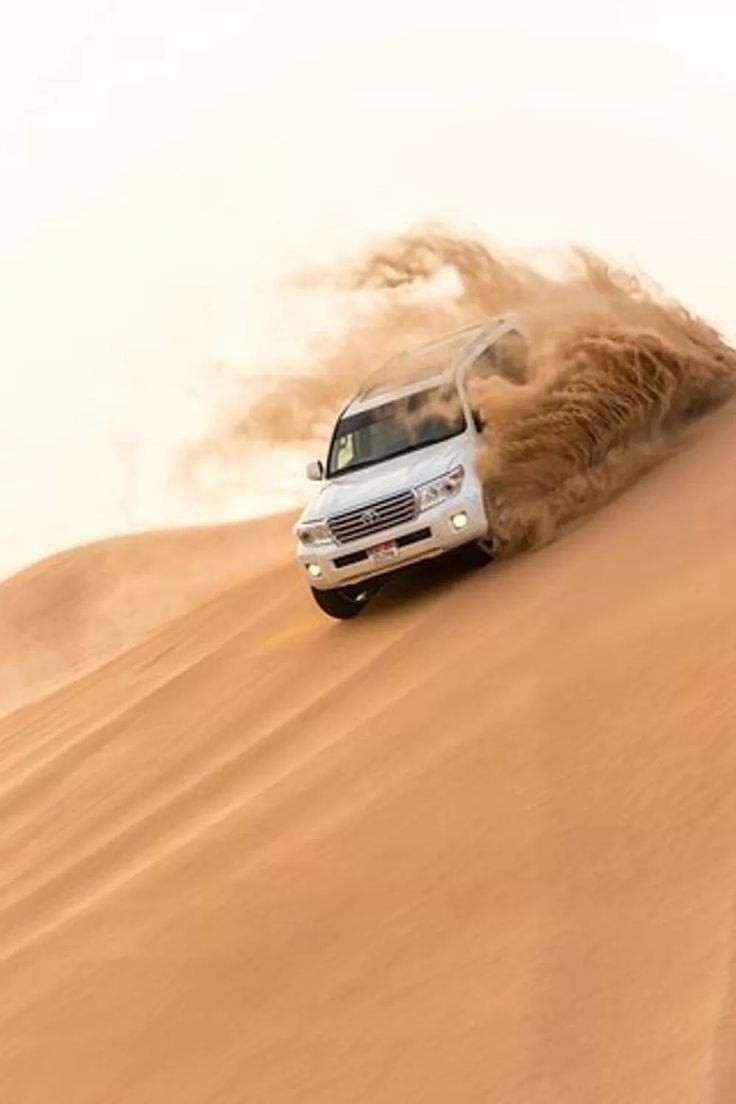
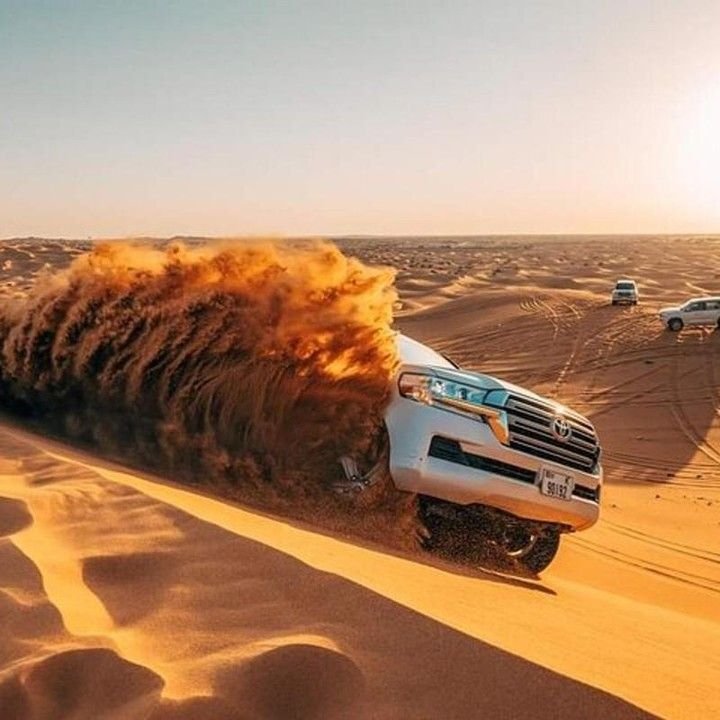
Understanding dune shape is not just academic — it is exactly what an experienced desert driver uses to plan a safe, thrilling route. Linear dunes like ours have a gentler windward slope and a steeper leeward slope, so drivers approach climbs at an angle that uses the dune’s natural shape rather than fighting it, building momentum on the firmer windward face before cresting. Tyres are deflated to around 15 to 20 PSI before driving, which widens the contact patch and lets the vehicle float across loose sand instead of digging in. This is also why dune bashing should always be left to an experienced, licensed driver: misjudging a slip face or a soft patch on an unfamiliar dune is how vehicles get stuck or roll, and our drivers read the dunes the same way the science in this guide describes them.
🏜️ Experience the dunes for yourself
Reading about dune science is one thing — feeling the dunes under a 4×4, climbing one on foot at sunset, or sliding down on a sandboard is another entirely. Our desert safaris run in the Al Khatim and Al Khaznah desert, exactly the linear-dune region described in this guide, with self-drive and sharing options from AED 40 per person, or the full evening safari with dune bashing, a camel ride, BBQ dinner and live shows from AED 250. Choose your package and any extras in the builder below, send one WhatsApp message, and pay on arrival — the easiest way to turn dune science into a real desert evening.
The colour science & how tall dunes get
The golden-ochre colour comes from iron-oxide in the sand grains, with quartz, carbonate and mafic minerals subtly affecting the exact shade from one stretch of desert to another. Around Al Khatim the dunes typically rise 20 to 50 metres — tall enough for a thrilling dune-bashing climb, but a different scale entirely from the giants further south.
Further south-west toward Liwa, on the edge of the Empty Quarter (Rub’ al Khali), the dunes grow dramatically larger — Moreeb Dune alone rises to around 300 metres, among the tallest sand dunes anywhere on Earth.
- 🛻Toyota Land Cruiser 4×4sDriven by experienced desert drivers who adjust the dune-bashing intensity for your group.
- 🏕️Clean, traditional desert campSeparate washrooms for men and women, majlis seating, sheesha area and live entertainment.
- 💬Book on WhatsApp, pay on arrivalNo online payment for standard packages — just message us and pay when you arrive.
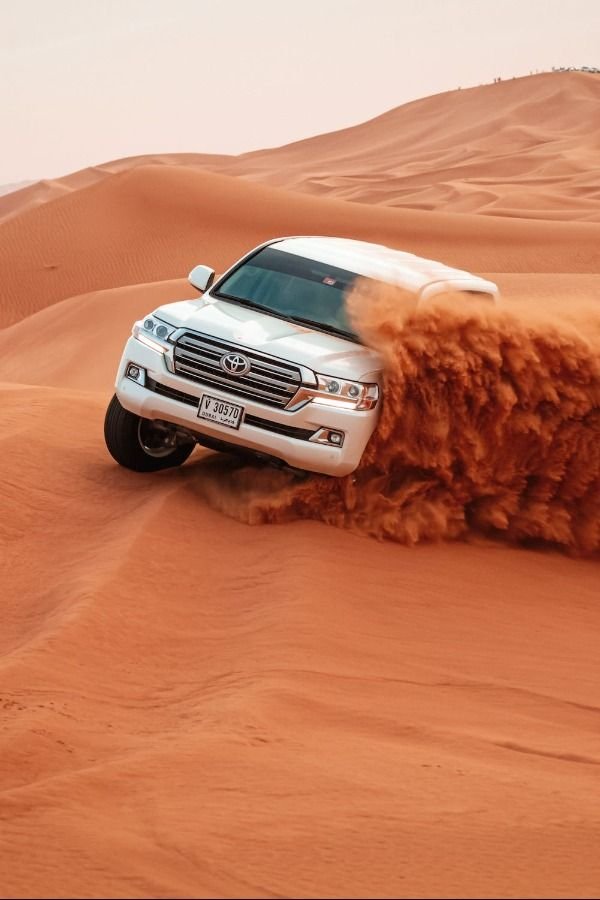
Abu Dhabi sand dunes — quick facts
Here are the quick facts about Abu Dhabi’s sand dunes, plus what our guided safari includes. We provide unlimited water, washrooms, and Arabic costumes for photos, all at our camp among the real linear dunes of Al Khatim & Al Khaznah — dune bashing, camel ride, sandboarding, BBQ dinner and live shows.
Landscape, heritage & wildlife
🏜️ The desert landscape
The desert at Al Khatim and Al Khaznah, about 45 minutes south-east of the city, is shaped by wide erg dunes and the seasonal shamal winds that sweep across them. Iron-oxide in the sand gives it a warm ochre colour, turning copper and amber at sunset. October through April is the best time to visit, with daytime temperatures of 22°C to 30°C and clear, comfortable winter nights around 15°C.
🏕️ Bedouin heritage
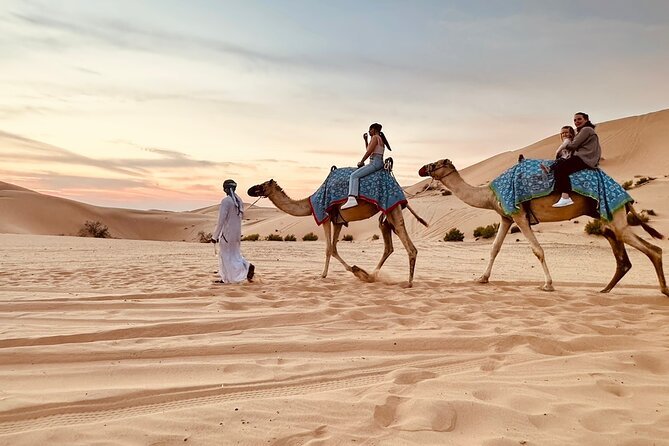
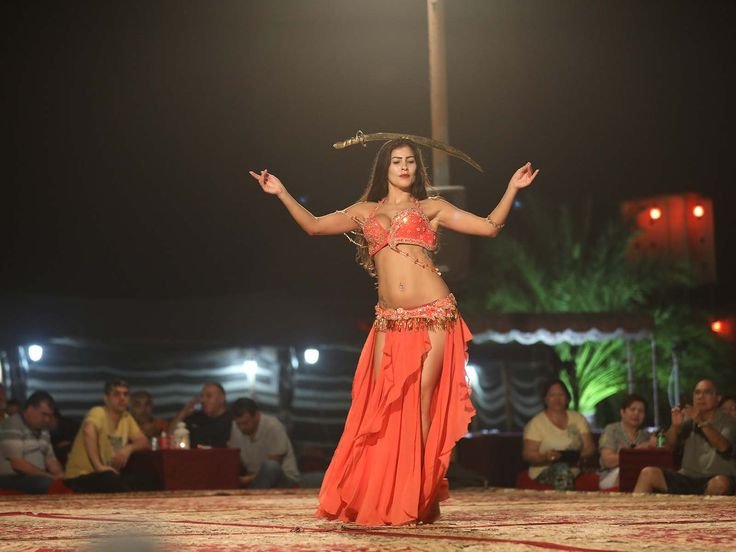
Generations of nomadic Bedouin called this desert home, navigating by the stars and travelling its dunes by camel. The camp today honours that history with qahwa, fresh dates, and traditional majlis seating. Henna art, Arabic costumes for photo moments, and live Tanoura and belly-dance performances make the cultural connection feel genuinely real.
🦅 Desert wildlife & the Empty Quarter
The Arabian oryx, the UAE’s national animal, shares the protected desert corridors near Al Khatim with sand gazelles and migrating houbara bustards. Further south, the Liwa region and the Empty Quarter (Rub’ al Khali) hold the world’s tallest dunes, Moreeb Dune among them at roughly 300 metres. Falcon photography, available as an add-on, lets guests pose with a trained falcon as part of the UAE’s UNESCO-recognised falconry tradition.
Sand dunes vs fossil dunes — what is the difference
Three different desert experiences, three very different distances — here is exactly how they compare, so you can pick the right one for your trip.
Crescent-shaped, isolated
Forms where wind blows steadily from one direction with limited sand supply. Isolated, crescent-shaped mounds that can migrate as a single unit. Less common around Al Khatim.
Long ridges — what we ride
Long, branching ridges formed by fairly consistent wind direction with seasonal variation. This is the dominant type around Al Khatim, confirmed by scientific survey — exactly what you dune-bash across.
Multi-armed peaks
Forms where wind blows from multiple directions through the year, building tall, multi-armed peaks rather than ridges. More common toward Liwa and the Empty Quarter.
Abu Dhabi Sand Dunes — FAQs
Abu Dhabi’s sand dunes formed as wind picked up loose sand grains, originally sourced from exposed sediment as sea levels changed over tens of thousands of years, and deposited them downwind in mounds and ridges. Continued wind action over thousands of years built these deposits into the dune fields seen today, which are still actively shaped and moved by the wind.
Scientific surveys of eastern Abu Dhabi, including the Al Khatim region, show the dunes are mainly long, branching linear (seif) dunes, with elevations reaching up to around 40 metres and a north-west to south-east orientation. Star-shaped and crescent (barchan) dunes occur elsewhere in the wider UAE desert system, particularly toward Liwa and the Empty Quarter.
The warm golden to ochre colour comes from iron-oxide content in the sand grains, similar to rust. The exact shade also depends on the mineral mix — quartz, carbonate and mafic minerals are all present in varying amounts — and the colour appears most vivid at sunrise and sunset, when low-angle light intensifies the warm tones.
The dunes around Al Khatim and the wider eastern Abu Dhabi desert typically reach 20 to 50 metres. Further south-west toward Liwa, dunes grow significantly larger, with Moreeb Dune (Tal Moreeb) reaching around 300 metres, among the tallest sand dunes in the world.
Yes. Dunes migrate gradually as wind erodes sand from the gentler windward slope and deposits it on the steeper leeward slope, slowly shifting the whole dune downwind over time. Smaller dunes generally move faster than large ones, and the rate depends on wind strength, sand supply and dune type.
Sand dunes, like the ones on our safari, are active and still shaped by wind today. Fossil dunes, such as the Al Wathba Fossil Dunes, are ancient dune shapes that became cemented in place by minerals roughly 120,000 to 150,000 years ago and no longer move — see our dedicated Fossil Dunes guide for the full story.
Moreeb Dune (Tal Moreeb) in the Liwa Desert is generally considered the tallest sand dune in the UAE, rising to around 300 metres with a steep 50-degree slip face. It is roughly 250 km and 2.5 to 3 hours from Abu Dhabi city, a separate trip from our standard safari location at Al Khatim.
Yes, climbing smaller dunes on foot is a common and popular activity at the desert camp, especially for sunset views and photos. Larger dunes are better experienced by 4×4 dune bashing with an experienced driver, which is included in our standard safari packages.
Sunrise and sunset are best, when the low sun angle creates long shadows that reveal the ripple texture and curved shapes of the dunes, and intensifies the golden-orange colour of the sand. Midday light is harsh and flattens these details.
The easiest way is a guided desert safari in the Al Khatim and Al Khaznah desert, where you can ride across the dunes by 4×4, climb them on foot, sandboard down them, and watch the colours change at sunset. Our safaris start from AED 40 per person self-drive, or AED 250 for the full evening experience with BBQ dinner and live shows. Choose your package in the builder, send one WhatsApp message and pay on arrival.
Desert safari packages to experience the dunes
Compare every package, then experience the dunes, and book the one that fits your day and budget on WhatsApp.
Ready for the dunes?
Send your inquiry on WhatsApp and we’ll confirm your Abu Dhabi desert safari — availability, pickup and price — in minutes.
Book on WhatsAppSend your booking request
Fill in a few details and we’ll open WhatsApp with everything ready to send. No online payment — we confirm availability, pickup & final price, and you pay on arrival.
Please add your name and WhatsApp number so we can confirm.
No online payment is taken here — this just opens WhatsApp with your details, and we reply with availability and the final price.