Red Dunes
Abu Dhabi
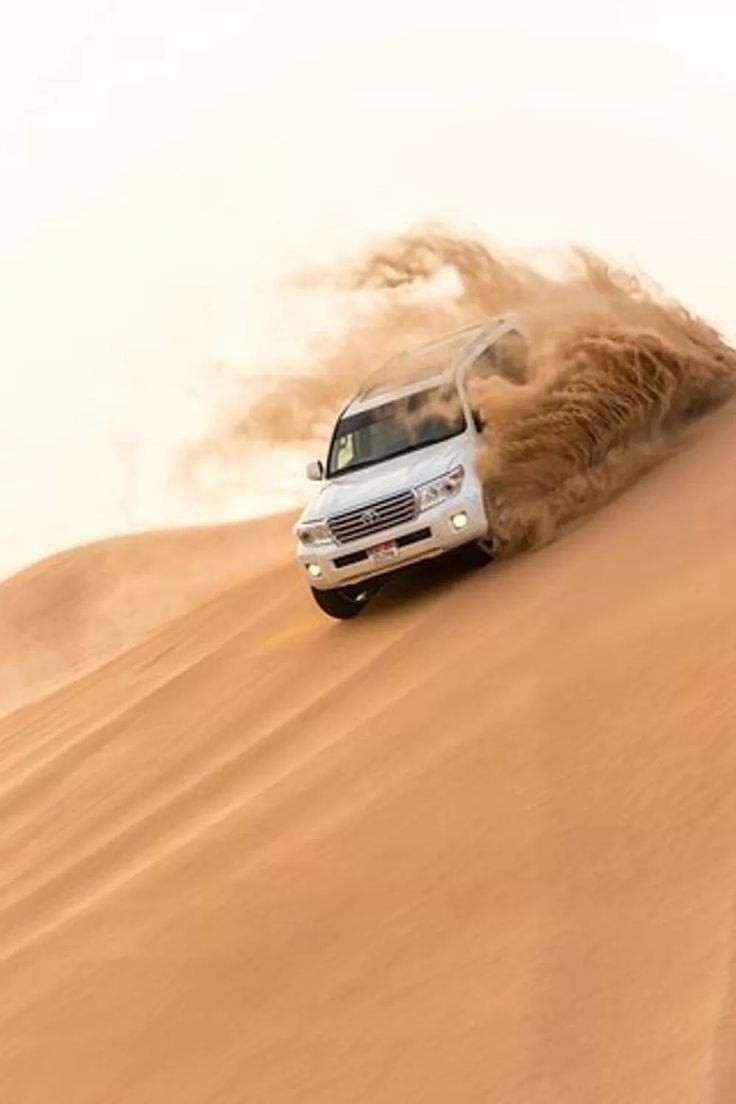
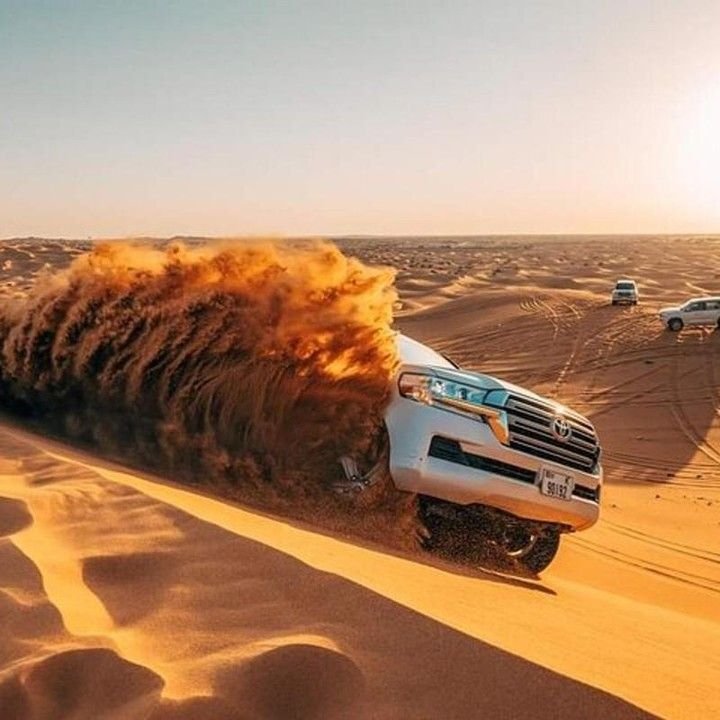
The iron-oxide red sand dunes of Al Khatim — 45 minutes from Abu Dhabi city — glow deep ochre-red at golden hour. Dune bash across them, sandboard down them, then watch the sunset ignite the ridgelines before BBQ dinner & three live shows at camp.
From AED 40 per person self-drive · AED 700 private car up to 6 · pay on arrival
What you’ll do on the red dunes
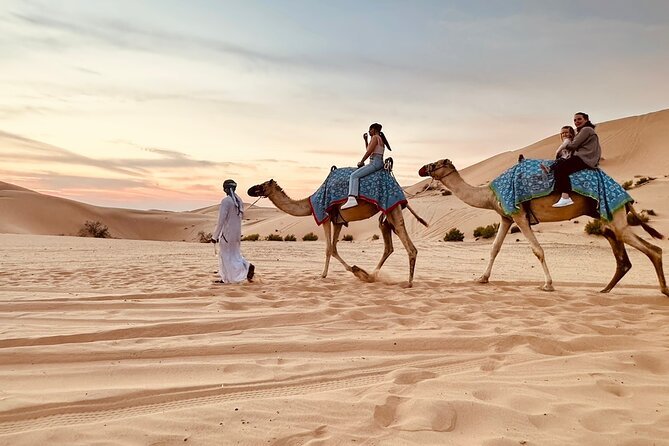
Why the red dunes of Abu Dhabi beat any other desert in the UAE
Taller than Dubai’s Big Red, a fraction of the traffic, and the same iron-oxide sand that colours the Empty Quarter — the Al Khatim red dunes are 45 minutes from the city and from AED 40 per person.
Real iron-oxide red sand — not marketing
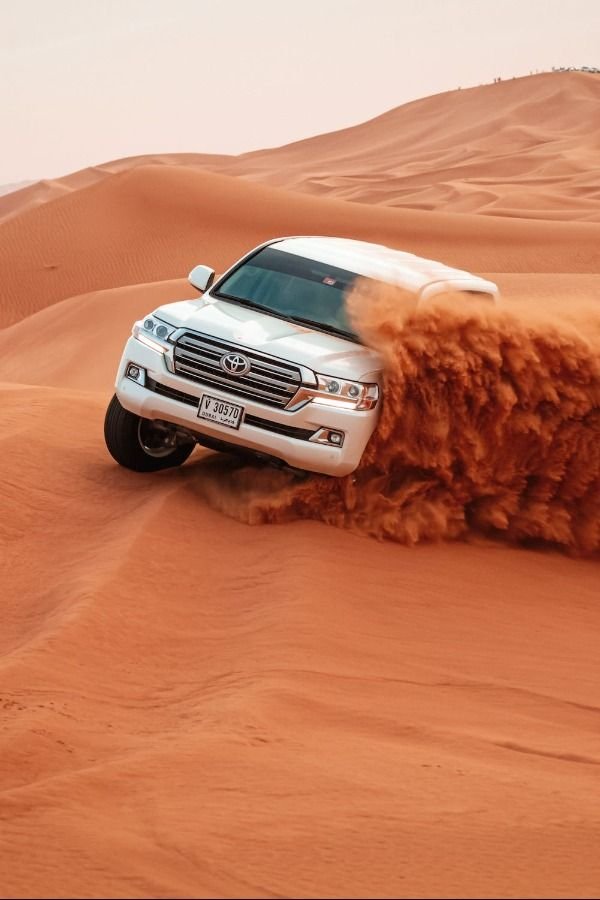
The red in these dunes is geology, not a brand name. Iron minerals in the sand grains have oxidised over millennia, coating each grain in a microscopic rust-red film. The further inland you travel from the pale coastal sand of Abu Dhabi city, the older and redder the dunes become — Al Khatim sits precisely in this transition zone, which is why its ridgelines shift from gold to deep ochre-red as the sun drops. At golden hour the effect intensifies dramatically: low-angle light rakes across the iron-rich sand and the entire dune field appears to ignite.
Quieter and taller than Dubai’s “Big Red”
Dubai’s famous Lahbab red dunes (Big Red) process convoys of tour vehicles daily — tyre tracks crisscross every face and camps cluster within sight of each other. The Al Khatim red dunes carry a fraction of that traffic. Whole basins sit untouched between safaris, ridgelines hold clean wind-sculpted edges, and your sunset photographs contain sand and sky rather than other people’s Land Cruisers. For photographers and first-timers alike, the difference is immediately visible.
From AED 40 — the cheapest red dunes access in the UAE
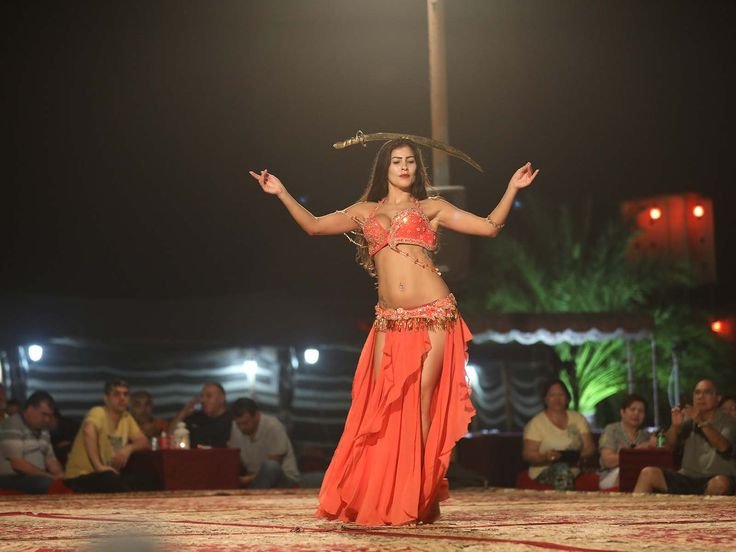
Our self-drive package puts you on the red dunes for AED 40 per person: drive your own car to the Al Khatim meeting point, join the dune bashing convoy, and get the complete camp evening — camel ride, sandboarding, BBQ dinner, belly dance, LED Tanoura and fire show. Sharing bus pickup is AED 60, sharing 4×4 is AED 150, and a private Land Cruiser for up to 6 is AED 700 flat. Every option is pay on arrival with no deposit — no other red dunes operator in the UAE publishes an entry price anywhere near this.
Hour-by-hour red dunes safari itinerary
The evening is engineered around one moment: standing on a high red dune crest as the sunset turns the sand crimson. Here is how the timing works.
| Time | Activity | Duration | Red dunes notes |
|---|---|---|---|
| 3:30–4:00 PM | Pickup from Abu Dhabi | — | Al Wahda Mall, Mazyad Mall, Safeer Mall Shabiya — or self-drive to meeting point |
| 4:00–4:45 PM | Drive east on the E22 | 45 min | Watch the sand colour shift from coastal pale gold to inland ochre-red |
| 4:45–5:30 PM | Dune bashing on the red dunes | 30–45 min | Land Cruiser convoy across the iron-oxide ridgelines of Al Khatim |
| 5:30–6:15 PM | Sunset stop & sandboarding | 45 min | The peak red window — low sun ignites the sand; boards provided |
| 6:15–6:30 PM | Camp arrival — camel ride & henna | 15 min | Short camel ride against the last red light on the dunes |
| 6:30 PM | Starters served | — | Pakora, samosa and masala chai as the desert cools |
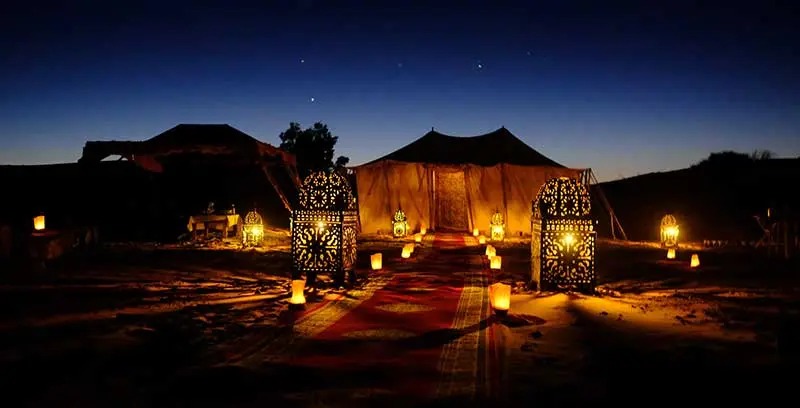
| 7:00–8:30 PM | BBQ dinner + belly dance, Tanoura & fire show | 90 min | Full veg & non-veg buffet followed by three live shows |
| 8:30–9:30 PM | Return to Abu Dhabi | 45 min | Drop-off at your original pickup point |
Desert safari prices at a glance
Self-drive AED 40 · shared bus AED 60 · shared 4×4 AED 150 · private Land Cruiser AED 700 for up to 6. Every option includes dune bashing, a camel ride, sandboarding, the BBQ dinner and live shows. Compare every package, or build your safari below and send it on WhatsApp — pay on arrival.
Red dunes safari price comparison — every package
Every package below includes the belly dance, LED Tanoura and fire show at no extra charge. The only difference is your transfer and comfort level.
| Package | Price | Transfer | Belly dance + shows | |
|---|---|---|---|---|
| Self-DriveBest value | AED 40per person | Drive your own car to meeting point | ✅ Belly dance + Tanoura + fire show | Book |
| Sharing Bus | AED 60per person | Shared bus from city malls | ✅ Belly dance + Tanoura + fire show | Book |
| Sharing 4×4Popular | AED 150per person | Shared Land Cruiser pickup | ✅ Belly dance + Tanoura + fire show | Book |
| Private Car | AED 700up to 6 | Private vehicle, up to 6 guests | ✅ Belly dance + Tanoura + fire show | Book |
| Evening SafariMost popular | AED 250per person | Shared — includes VIP seating + quad bike | ✅ Belly dance + Tanoura + fire show + VIP | Book |
| Overnight Safari | AED 450per person | Shared — overnight Bedouin camp | ✅ Belly dance + Tanoura + fire show + stargazing | Book |
The red dunes don’t care what you paid — AED 40 per person self-drive puts you on the same iron-oxide sand, the same sunset crest, and the same full camp evening as the AED 250 VIP package. The only difference is how you get there.
Pick a package, add your extras, send on WhatsApp
Choose your base safari, add any optional upgrades, and your total updates instantly. Your inquiry goes straight to WhatsApp — we reply with availability and pickup details.
Your Safari
Final total confirmed on WhatsApp.
No online payment. We confirm availability, pickup & final price on WhatsApp +971 50 414 6025.
The science of red sand — why these dunes glow at sunset
The red colour of the Al Khatim dunes is iron oxide — the same chemistry as rust. Each sand grain carries a microscopically thin coating of oxidised iron minerals, built up over thousands of years of exposure to oxygen and moisture. The older the dune sand, the longer this oxidation has worked, and the deeper the red. Coastal sand near Abu Dhabi city is young and pale; the inland ergs of Al Khatim and Liwa are ancient and red.
The glow at sunset is physics on top of chemistry. When the sun drops below roughly 15 degrees, its light travels through more atmosphere, shifting warm; that warm light striking iron-oxide sand at a raking angle saturates the red dramatically. This is why our evening safari schedules dune bashing to finish on a high crest just before sunset — you stand on the dunes at the exact moment the colour peaks.
- 🔴Iron-oxide chemistryRust-red mineral coating on each grain — older inland sand is deeper red.
- 🌅Golden-hour physicsLow warm light on iron-rich sand saturates the red — timed into every safari.
- 📸Peak photo window60–90 min before sunset. Add pro photography from AED 50 for edited shots.
Everything you need to know about the red dunes of Abu Dhabi
📍 Where exactly are the red dunes in Abu Dhabi?
Abu Dhabi’s red dunes run in a broad inland band that begins roughly 60–80 km east and south of the city, where young pale coastal sand gives way to older, iron-stained erg formations. The most accessible concentration is the Al Khatim desert, straddling the E22 Abu Dhabi–Al Ain highway about 45 minutes from the city — this is where our safaris operate, and it is the closest point to Abu Dhabi where the sand turns visibly ochre-red. Continue southwest and the colour deepens: the Liwa crescent, some 2–2.5 hours from the city on the edge of the Rub al-Khali (Empty Quarter), holds the tallest and reddest dunes in the UAE, including Moreeb Dune at roughly 300 metres — one of the tallest sand hills on Earth. A useful rule: the further from the coast, the older the sand, the redder the dune. For a single evening with maximum red-sand impact per kilometre travelled, Al Khatim is the rational choice; for a full-day pilgrimage to the deepest reds, Liwa is the destination.
🔬 The geology — why this sand is red and coastal sand is not
Every red dune is a chemistry lesson written in landscape. Desert sand is mostly quartz, which is naturally pale — the red comes from a coating, not the grain itself. Trace iron minerals within and around the grains oxidise on contact with oxygen and episodic moisture, forming hematite and other iron oxides: microscopic rust. This film builds over thousands of years, which is why dune age directly predicts colour intensity. The coastal sands around Abu Dhabi city are geologically young, recently deposited, and barely oxidised — hence nearly white. The inland ergs of Al Khatim have had far longer exposure, and the ancient dune systems of Liwa and the Empty Quarter longer still, producing their signature deep orange-red. The shamal — the prevailing northwesterly wind — continually reworks these ergs into crescent and linear forms, exposing fresh faces whose colour shifts subtly with the angle of light across the day. Guests often ask if the colour is photographic exaggeration; it is not. At golden hour, the raking warm light on iron-oxide sand produces saturation no filter needs to fake.
📸 Photographing the red dunes — timing, angles, settings
The red dunes reward planning. Timing: the peak window is the final 60–90 minutes before sunset, when sunlight passes through more atmosphere, warms in tone, and rakes across the ridgelines at a low angle — the combination that saturates the red to its maximum. Our evening safari deliberately schedules the sunset stop inside this window. Angles: shoot with the sun at 45–90 degrees to your subject rather than directly behind you; side-light reveals the ripple texture that front-light flattens. Ridgeline silhouettes against the post-sunset sky work in the opposite direction — expose for the sky and let the dune go dark. Settings: phone cameras handle the dunes well — lock exposure on the sand, drop exposure compensation slightly (−0.3 to −0.7) to protect the red from blowing out, and resist over-saturating in edit; the real colour is already strong. Composition: a person standing on a distant crest gives the dunes scale that empty frames lack. Professional photography is available as an add-on from AED 50 if you would rather be in the frame than behind it.
⚖️ Al Khatim vs Liwa vs Dubai’s Big Red — an honest comparison
Three “red dune” destinations dominate UAE searches, and they serve different trips. Al Khatim (our base): 45 minutes from Abu Dhabi, genuinely red at golden hour, tall enough for serious dune bashing and sandboarding, and quiet — basins between safari routes sit untouched. Best for: an evening safari without sacrificing a full day. Liwa: 2–2.5 hours out, the deepest reds and the tallest dunes in the country (Moreeb Dune ~300 m), gateway to the Empty Quarter. Best for: full-day or overnight expeditions and photographers chasing the most dramatic sand in Arabia. Dubai’s Lahbab “Big Red”:
🦌 Life on the red sand — wildlife of the Al Khatim ergs
The red dunes look empty at noon and prove otherwise by evening. The Arabian oryx — the white antelope that is the UAE’s national animal, rescued from extinction by a breeding programme begun in the 1980s — ranges through the protected corridors around Al Khatim, and a white oryx standing on ochre-red sand at golden hour is among the most striking wildlife sights in the Gulf. Sand gazelles (rheem) move in small groups along the dune bases in the cooler hours, visibly paler than their mountain cousins — an adaptation to the open sand. Houbara bustards, the large ground birds around which Emirati falconry tradition was built, appear on the gravel plains at the dune field’s edge. After dark the shift changes: Arabian sand cats, red foxes and an array of geckos and skinks emerge, their tracks stitched across the slip faces by morning. Our drivers point out wildlife when spotted during dune bashing and will pause briefly for photographs — sightings are never guaranteed, which is precisely what makes them memorable.
🌡️ Best season and month-by-month guide for the red dunes
October–April is the prime season, with evening temperatures on the dunes between 15°C and 28°C. Within that window there are nuances worth knowing. October–November: warm days, balmy evenings, and the year’s clearest post-summer air — excellent colour saturation at sunset. December–January: the coolest and most comfortable dune bashing of the year; evenings drop to 12–15°C after dark, so bring a light jacket for the camp shows. February–March: rising warmth and the occasional spring haze; sunsets remain reliable. April: the closing window — warm but very workable evenings. May–September (summer): daytime highs of 40–48°C move the logic to timing rather than cancellation — the evening safari still runs (the sand cools fast after sunset), and the Sunrise Safari (AED 1,000 private) becomes the connoisseur’s option: dawn light on red sand with the desert at its coolest and emptiest. Whatever the month, the red dunes’ golden-hour colour peak is a daily constant — only the clock time of sunset moves.
All 13 activities in every standard package — including all 3 live shows
From AED 40 self-drive to AED 250 VIP — every package includes the full camp programme. No hidden charges. Pay on arrival.
Red dunes Abu Dhabi — frequently asked questions
The most accessible red dunes are in the Al Khatim desert, about 80 km east of Abu Dhabi city on the E22 highway — roughly 45 minutes by car. The deepest red-orange dunes in the emirate are further south in the Liwa desert on the edge of the Empty Quarter, including Moreeb Dune at around 300 metres tall.
The red-orange colour comes from iron oxide. Over thousands of years, iron minerals in the sand grains oxidise — essentially rust — coating each grain with a thin red film. Older dune sand carries more oxidation, which is why the inland dunes of Al Khatim and Liwa are noticeably redder than the pale coastal sand near Abu Dhabi city.
From AED 40 per person self-drive to the Al Khatim red dunes meeting point, AED 60 with sharing bus pickup, AED 150 with sharing 4×4 pickup, or AED 700 for a private Land Cruiser for up to 6 persons. All packages are pay on arrival with no deposit.
Dune bashing across the red dunes in a Land Cruiser, short camel ride, sandboarding, henna for ladies, unlimited water, starters at 6:30pm, sunset photography stop on the red sand, Arabic costumes for photos, BBQ buffet dinner (veg and non-veg), belly dance, LED Tanoura and fire show.
Golden hour — the 60–90 minutes before sunset — is when the red dunes are at their most intense. Low-angle sunlight rakes across the iron-oxide sand and deepens the ochre-red colour dramatically. Midday light flattens the colour; early morning is the second-best window.
Abu Dhabi’s Al Khatim red dunes are taller, quieter and less trafficked than Dubai’s Lahbab (Big Red) area, which sees heavy daily tour traffic. For the deepest red sand in the UAE, the Liwa dunes in southern Abu Dhabi emirate are unmatched — they form part of the Empty Quarter, the world’s largest sand desert.
You can drive to the edge of the Al Khatim red dunes yourself — our AED 40 self-drive package uses exactly this: you drive your own car to the meeting point and join the safari from there. Driving into the dunes themselves requires a capable 4×4, deflated tyres and desert driving experience; soft red sand bogs down standard vehicles quickly.
Evening safari pickups run 3:30–4:00 PM from Abu Dhabi so that dune bashing finishes on a high red dune crest just before sunset — around 5:30–6:30 PM depending on season. This timing is deliberate: it places you on the dunes during the exact window when the red colour peaks.
Al Wahda Mall, Mazyad Mall, and Safeer Mall Shabiya — all in Abu Dhabi city. Private car pickup (AED 700 for up to 6) collects from any Abu Dhabi address. We do not operate Dubai pickups.
Yes — sandboarding is included in every package. The red dunes of Al Khatim have long, smooth leeward faces that are ideal for sandboarding, and the fine iron-oxide sand brushes off clothing easily. Boards are provided and guides assist beginners and children.
Other Abu Dhabi desert safari experiences
Compare every way to see the Al Khatim desert — all include the live belly dance, Tanoura and fire show.
See the red dunes safari tonight
Book any evening safari on WhatsApp and we’ll confirm your pickup, availability and price in minutes. The belly dance, LED Tanoura and fire show are included in every package.
Book on WhatsApp